TOM HUMPLIKBy day AI/ML leadership · national securityAfter hours Products · experiments · systems

Built after
bedtime
stories.

I’m Tom Humplik. By day, I lead a rapid-prototyping software team at the National Reconnaissance Office, where I’m working to change how the intelligence community uses AI to make sense of data at a scale no human analyst could tackle alone. At home, I’m a dad to two little girls, which means my life outside work is mostly stories, snacks, tiny emergencies, and an unreasonable amount of joy. The building usually starts once they’re asleep.

The subjects couldn’t be further from the day job, but the engineering questions are the same: what should the model decide, what must ordinary code guarantee, and where does the system fail?

For most of my career, an idea that popped into my head was probably going to stay an idea. I simply didn’t have the time to turn every curiosity into something real. Generative AI changed that. It gave me a way to turn a few spare hours into a workshop for experimenting, learning, and building things that otherwise would never have existed.

This site is that workshop, in public.

Always looking for feedback. Connect with me on LinkedIn if you want to know more about any of this, or about the work I do.

The work

How I build

Every project here gets built the same way. The model gets the judgment calls: which analysis fits the question, what the script should say, whether a caption sounds like something you’d say to a three-year-old. Ordinary, tested code gets everything that has to be correct.

And when something breaks — a promo that leaked the answer, a chart that didn’t match its title, a lesson that shouldn’t have shipped — the fix becomes a rule the next build starts from.

SELECTED WORK / 01—07

A featured system, two shipped products, a concluded experiment, three in development.

Featured system01 · What a model can and cannot be trusted with
01AI system · Web · 2026

Analysis Workbench

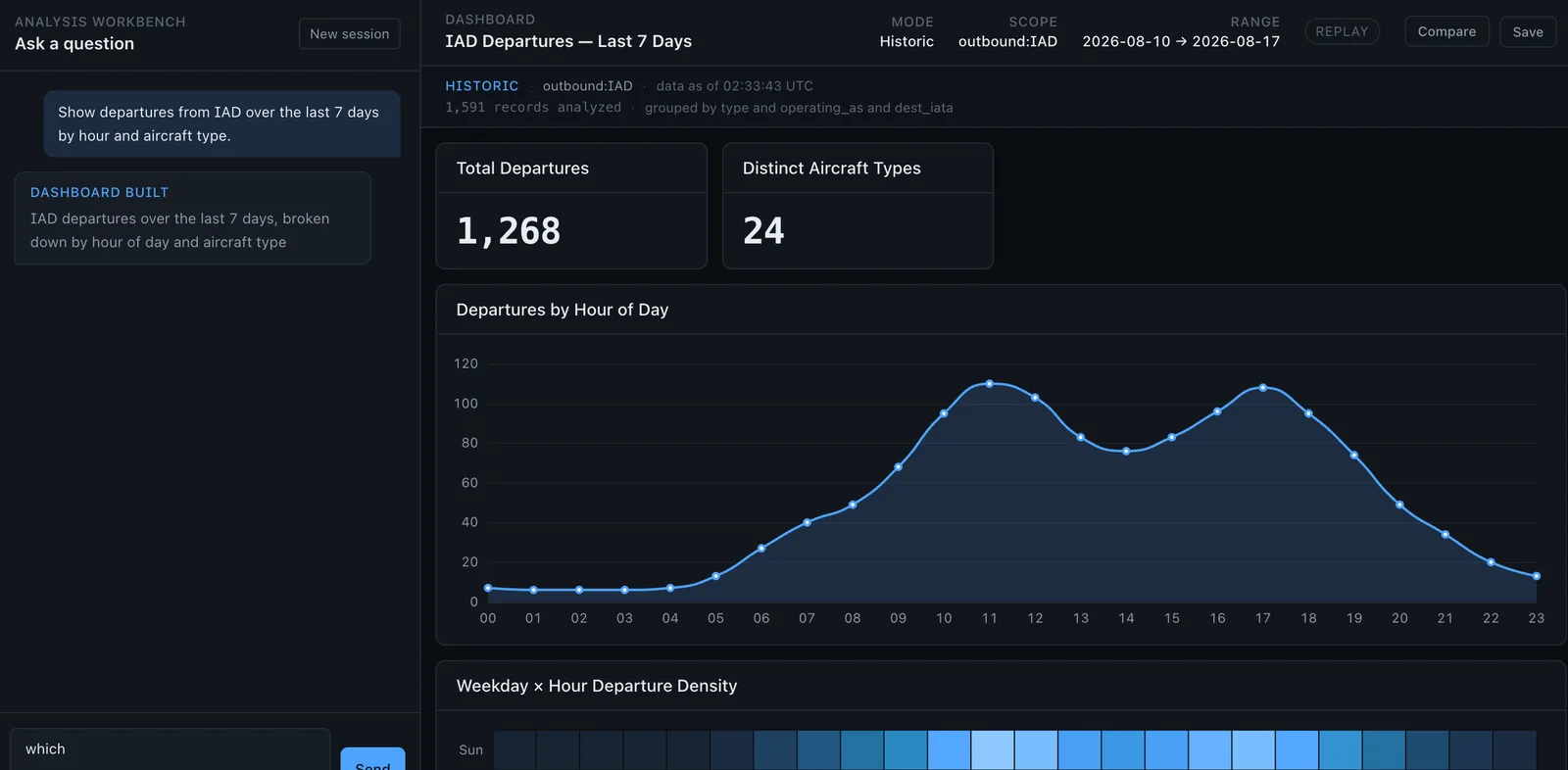
Ask a question about flight data in plain English and get the dashboard that answers it. The model chooses the analysis. It never computes a number and it never draws a component.

It plans in a closed vocabulary — 16 deterministic analytics operations, 11 frozen widget types, one Zod-validated object — over a single MCP server. Every value on screen comes from ordinary tested code, and a boundary test fails the build if anything downstream learns what a flight is.

Systems architecture · LLM planning · A model that never owns the math

How I built it
Analysis Workbench answering 'show departures from IAD over the last 7 days by hour and aircraft type' with stat tiles and a departures-by-hour line chart
A QUESTION IN. A DASHBOARD OUT.
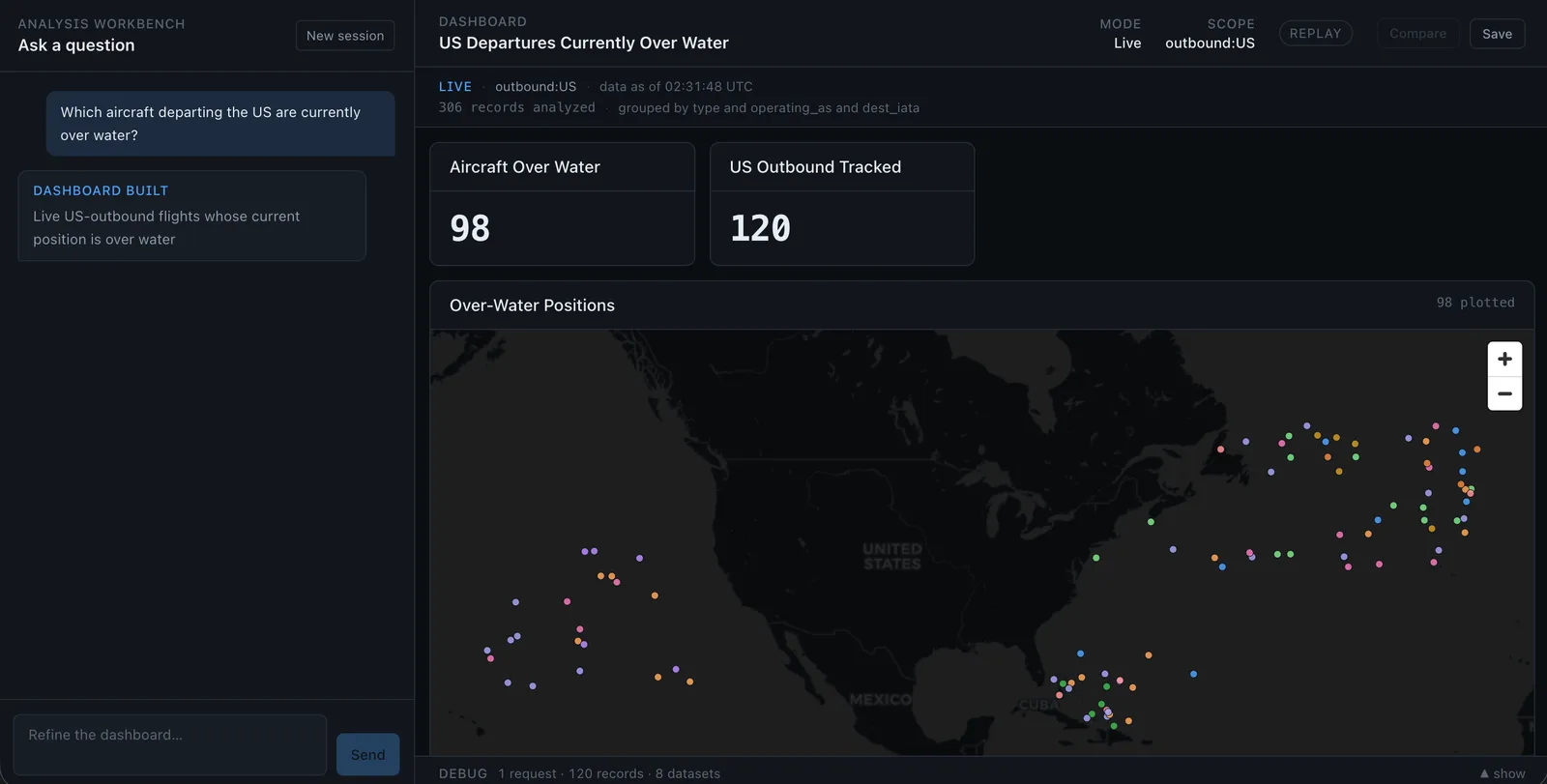
A live dashboard plotting which US-outbound aircraft are currently over water, as dots on a dark world map
OR A LIVE QUESTION, ANSWERED LIVE.
Shipped products02—03 · Live in the App Store
02

Shipped · iPhone · 2026

Gridiron Guesser

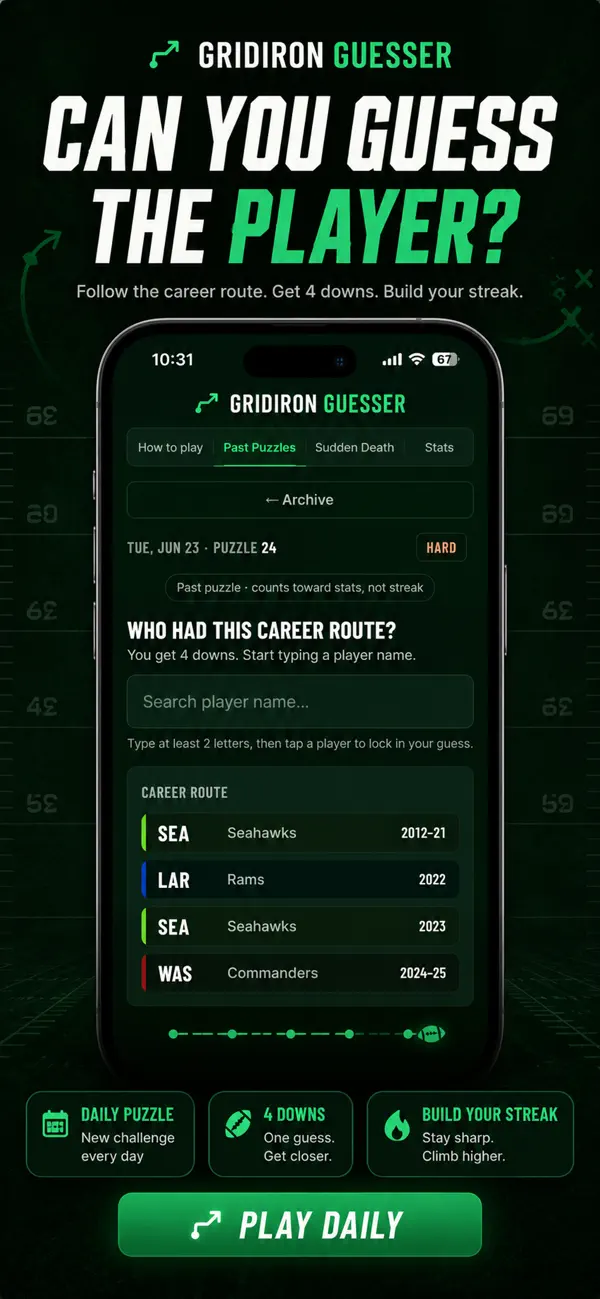
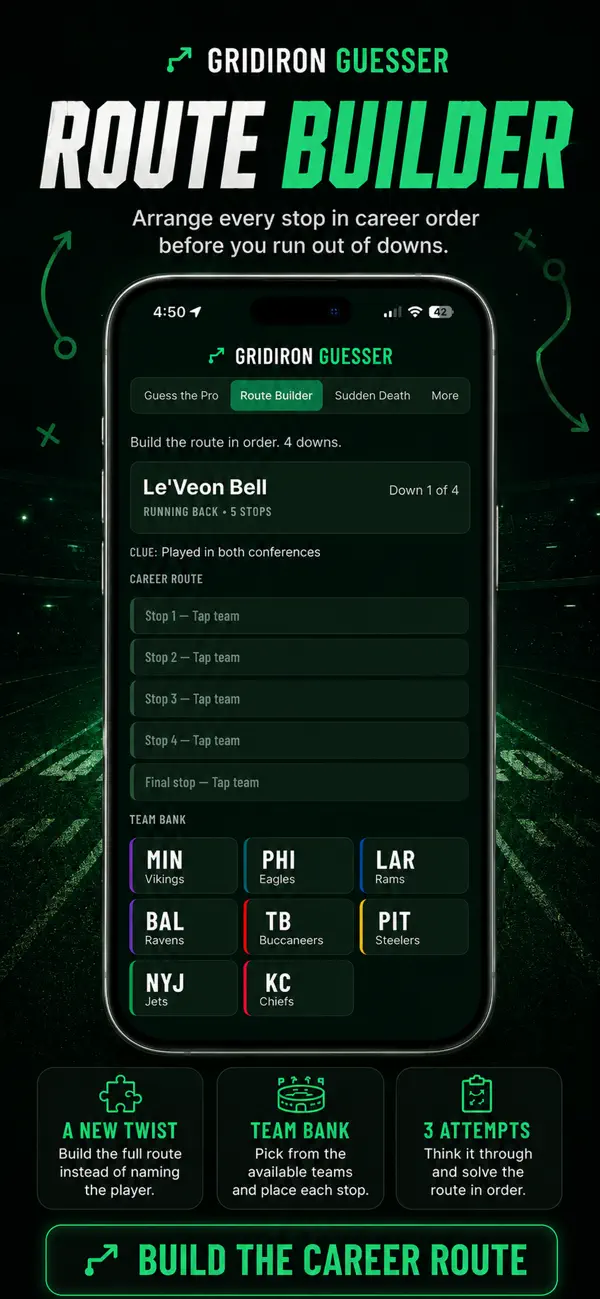
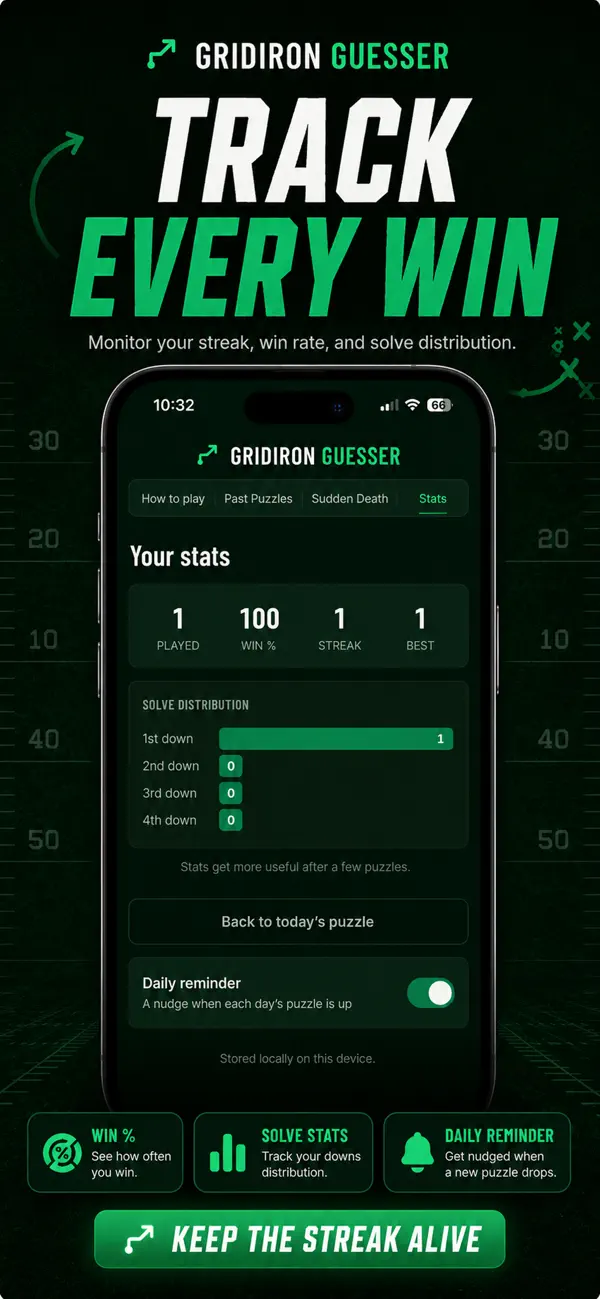
A daily NFL career guessing game built around a deceptively simple idea: read the route, name the player. Four downs, three game modes, and a reason to come back tomorrow.

Product design · Game systems · A daily video content machine

Gridiron Guesser product screenshot 1
Gridiron Guesser product screenshot 2
Gridiron Guesser product screenshot 3
03

Shipped · iPhone + iPad · 2026

Tooth Fairy Radar

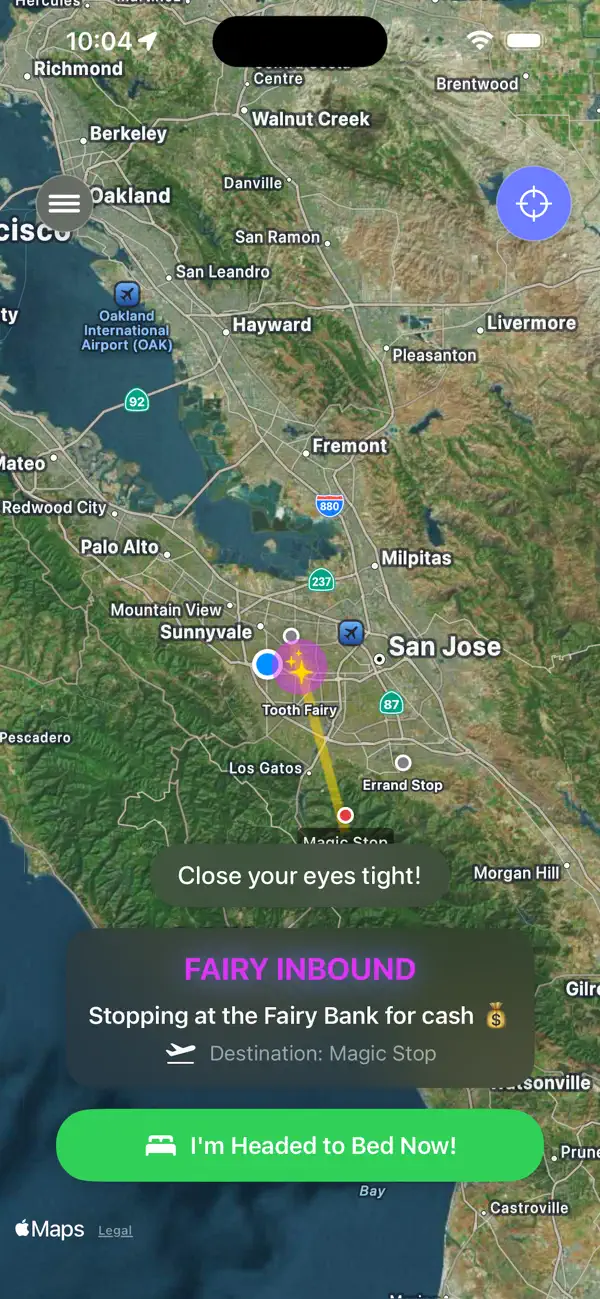
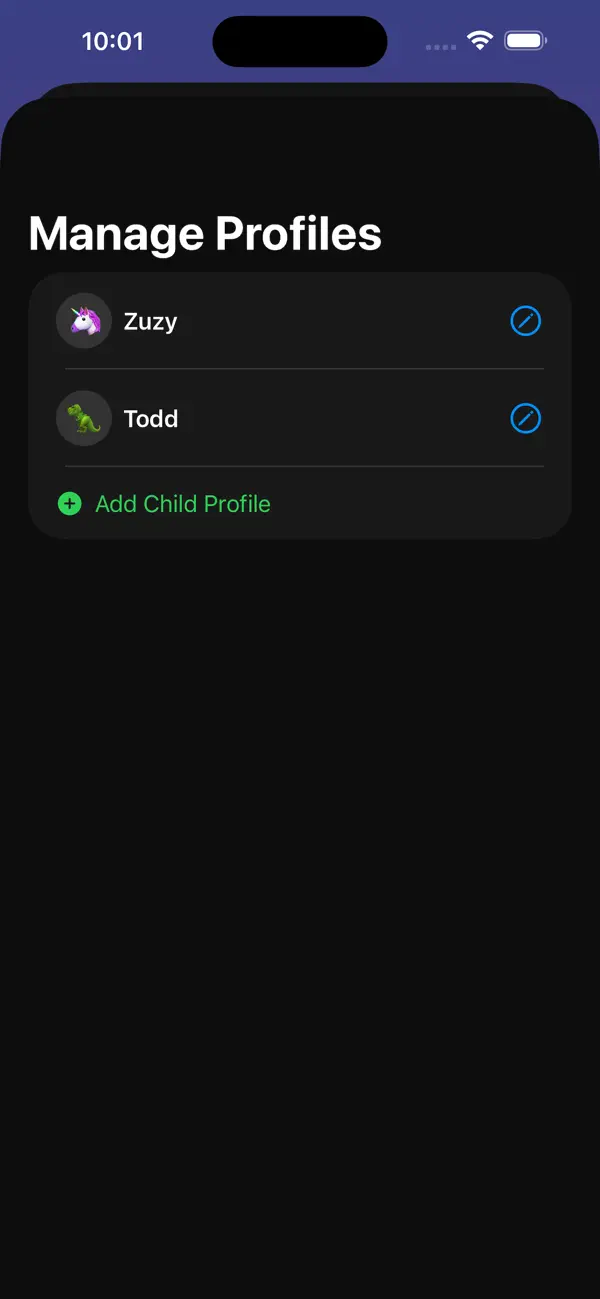
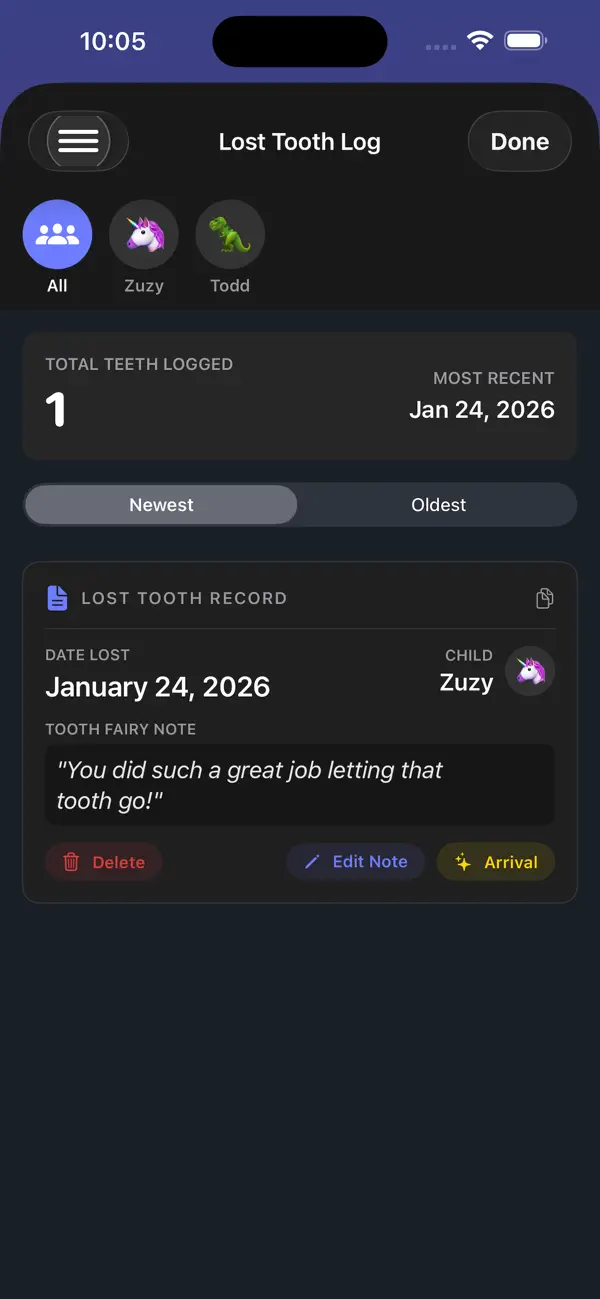
A playful night-time tracker that turns losing a tooth into an event. Parents stage the magic; kids watch the Tooth Fairy cross the map and wake up to a record of the moment.

Product design · SwiftUI · MapKit

Tooth Fairy Radar product screenshot 1
Tooth Fairy Radar product screenshot 2
Tooth Fairy Radar product screenshot 3
Experiments04 · Concluded — the lessons shipped elsewhere
04Experiment · Web · Concluded

Undercut

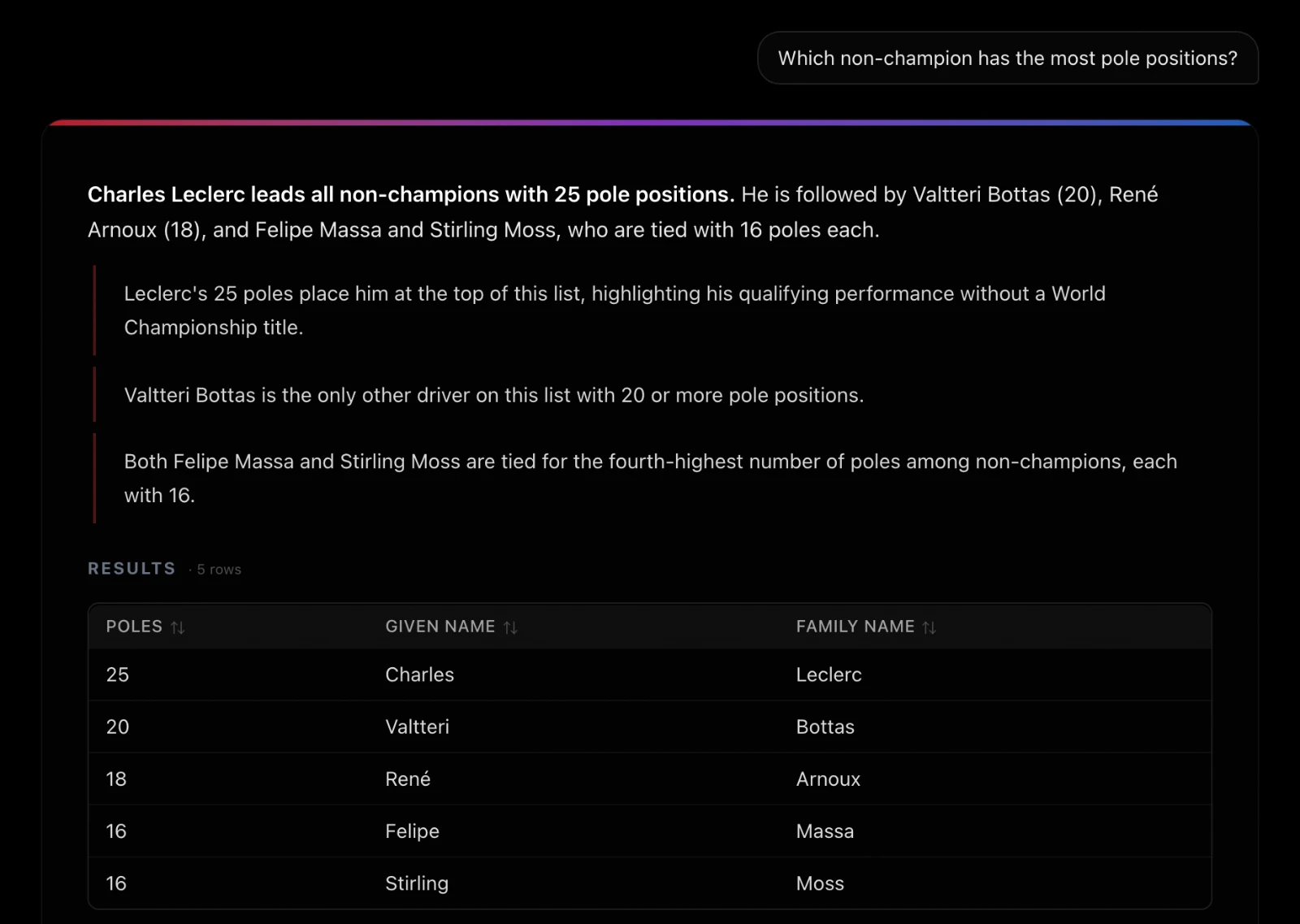
Undercut started with an unreasonable question: could one site answer almost anything about Formula 1? It explored race data, generated plots, and turned answers into social-ready graphics.

It never found the audience I hoped it would. It did become a serious education in LLM tool use, grounded analysis, generative interfaces, and where these systems break down.

LLM product design · Data tools · Generative interfaces

Undercut answering a Formula 1 question in plain English, with a grounded summary, supporting insights, and the results table it was computed from
A QUESTION IN. A GROUNDED ANSWER OUT.
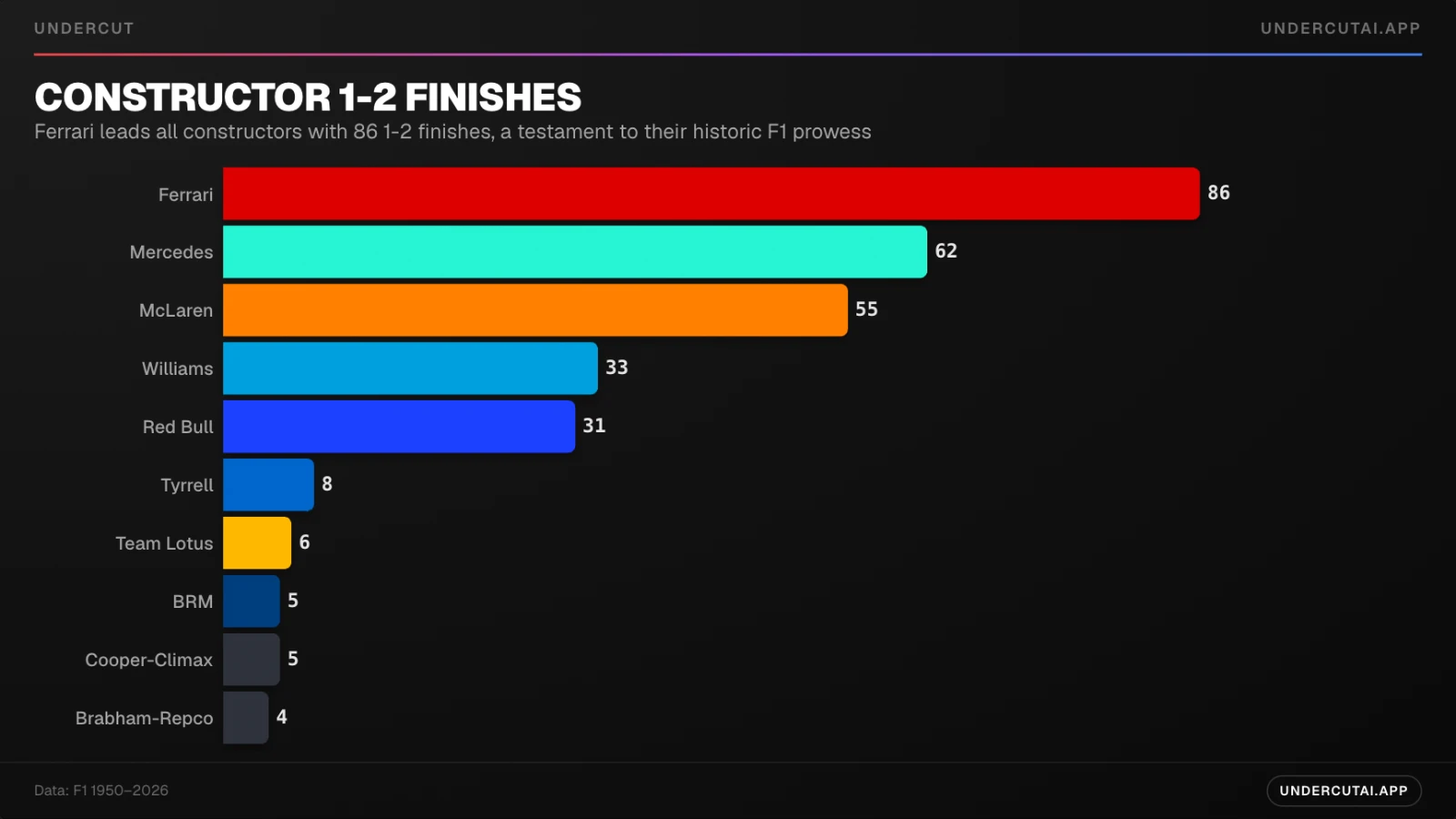
An Undercut chart export showing constructor one-two finishes, each bar in its team colour
THEN A CHART THAT CAN’T LIE.
In development05—07 · Unfinished, and honest about it
05In development · iPhone

Hold the Line

A minimalist WWI strategy game where the front is only as strong as the network behind it. Every trench, road, railhead, and supply route matters. Reinforce the right node, reroute when the line breaks, and hold long enough.

Systems design · iOS · In development

How I built it
Hold the Line battlefield showing connected trenches and supply routes
THE NETWORK HOLDS
Hold the Line battlefield during an attack with a broken supply route
UNTIL IT DOESN’T
06In development · Private web app

Zuzy’s World

A private photo playground for a three-year-old who takes her own pictures and can’t read a word. Her camera produces close-ups, motion blur, ceilings, and fingers over the lens. That’s the material, not the bug list.

Every photo becomes a small toy: swipe to browse, tap to hear a spoken caption, guess what the blurry red thing was. Nothing asks her to read, and nothing has to be taught.

Product design · Vision + voice · An audience of one

How I built it
Zuzy's World showing one of her own shots, deliberately blurred here, above the spoken caption written for it and three large buttons: Tell me, I love it, Silly
HER PHOTO. HER CAPTION.
Mystery mode asking who is peeking so close to the camera, with three thumbnails to choose from
THEN A GUESS WORTH MAKING.

Her photographs are blurred for this site. They aren’t in the app.

07In development · iPhone

Reading Helper

An early-reading curriculum built as an executable system: every lesson is data, and one validator owns every rule about what a good lesson is. Break a rule and the build fails.

On top of that sits a simple bet — a parent who doesn’t know phonics terminology can still teach reading well, if the app says exactly what to say and exactly what sound to model. The child never sees a worksheet. She hears a sound and plays a small game that only works one way.

Curriculum · Content engine · A validator with teeth

How I built it
A Reading Helper card headed For the grownup, explaining why listening comes first and telling the parent to wait and let the child answer
IT COACHES THE PARENT.
A Reading Helper activity: three plain illustrations — a dog, a door, a car — and no text, score, or streak anywhere on screen
SHE JUST PLAYS.

Working title. The name is still undecided.

ABOUT / TOM HUMPLIK

Different
domains.
Same discipline.

Before AI, I spent more than a decade on molecules, batteries, and wargames. Water moving through a pore barely wider than a water molecule. Ions moving through a battery electrode nobody can watch directly. Then supplies, aircraft, and people moving across a contested map.

The domains change. The job underneath them doesn’t: take something complicated, work out what actually matters, build a representation of it, and find out where that representation breaks. Small kids and a full-time job just make the loop shorter — small scopes, an early verdict, and a lot of leverage on coding agents to cover ground I don’t have the hours for.

The long version

By day · The part I can describe

I lead a rapid-prototyping software team at the National Reconnaissance Office, building AI-enabled analytical systems for intelligence work that runs well past human scale. The interesting part of that job isn’t any single prototype. It’s the direction around them: what the team takes on, what an AI capability has to prove before anyone is allowed to depend on it, and which prototypes have earned the right to become something the mission runs on.

  • Team building
  • Technical direction
  • AI architecture
  • Model evaluation
  • Prototype to production
  • Developer enablement
NOWDirector, AI/ML rapid prototyping

National Reconnaissance Office · AI/ML capabilities for large-scale intelligence analysis

BEFOREResearch Data Scientist

CNA · Sandia National Laboratories

FOUNDATIONPhD, Mechanical Engineering

MIT